Trees are one of the best parts of a South Carolina landscape. They provide shade, privacy, and plenty of character around your home. However, a tree that’s too close to your house can become a serious roofing concern, especially when strong winds and heavy rain move through the Upstate.
You don’t have to wait for a tree to fall on your roof to have a problem.
The South Carolina Emergency Management Division recommends checking your property for weakened trees and loose limbs before a storm. Warning signs include cracks, leaning trees, branches hanging over your home, and obvious decay or insect damage.
At Southern Shingles Roofing, we’ve seen how quickly a storm can turn an overhanging branch or weakened tree into roof damage. Here’s what to look for before that happens.
1. Branches Are Hanging Over Your Roof
Start with the easiest thing to spot: branches directly above or near your roof.
Branches don’t have to be huge to cause problems. Strong winds can move them against shingles, knock them onto the roof, or break them off entirely. Repeated contact can also damage shingles over time.
If branches are already touching your roof, they’re worth addressing before the next major storm.
2. The Tree Is Leaning
A noticeable lean can be a warning sign, particularly if the tree has recently shifted or the ground around its base looks disturbed.
SCEMD specifically recommends looking for trees that lean or appear one-sided when evaluating your property before a storm.
A leaning tree near your home doesn’t automatically mean it will fall. However, it may deserve an evaluation from a qualified tree professional.
3. You See Cracks in the Trunk or Major Limbs
Take a look at the trunk and larger branches from a safe distance.
Cracks or splits in major limbs can indicate structural weakness. The same goes for large cracks in the trunk. These areas can become particularly concerning when high winds put additional stress on the tree.
If you notice significant cracks near a tree that’s close to your home, consider having an arborist evaluate it.
4. There Are Dead or Broken Branches
Dead branches can become loose during storms and fall onto your roof, vehicles, or other parts of your property.
Look for branches that:
- Appear dead or leafless
- Have broken ends
- Hang loosely from the tree
- Are rubbing against other branches
- Extend directly over your roof
Regular tree maintenance can help reduce these risks. However, don’t try to remove large or unstable branches yourself. Storm-damaged trees and hanging limbs can be unpredictable and dangerous.
5. You Notice Decay or Insect Damage
Visible decay, cavities, damaged bark, or signs of insect activity can indicate that a tree isn’t as healthy as it appears.
SCEMD recommends checking trees around your home for obvious decay or insect infestations as part of storm preparation.
If you’re unsure about a tree’s condition, an arborist can assess the tree and help determine whether it poses a risk to your property.
6. The Tree Is Close Enough to Reach Your Roof
Here’s a simple question to ask yourself:
If this tree or one of its major branches fell, could it reach my house?
If the answer is yes, it’s worth paying attention to the tree’s condition, particularly before severe weather.
You don’t necessarily need to remove every tree near your home. The goal is to understand the potential risk and address problems before a storm does it for you.
What If a Tree Has Already Damaged Your Roof?
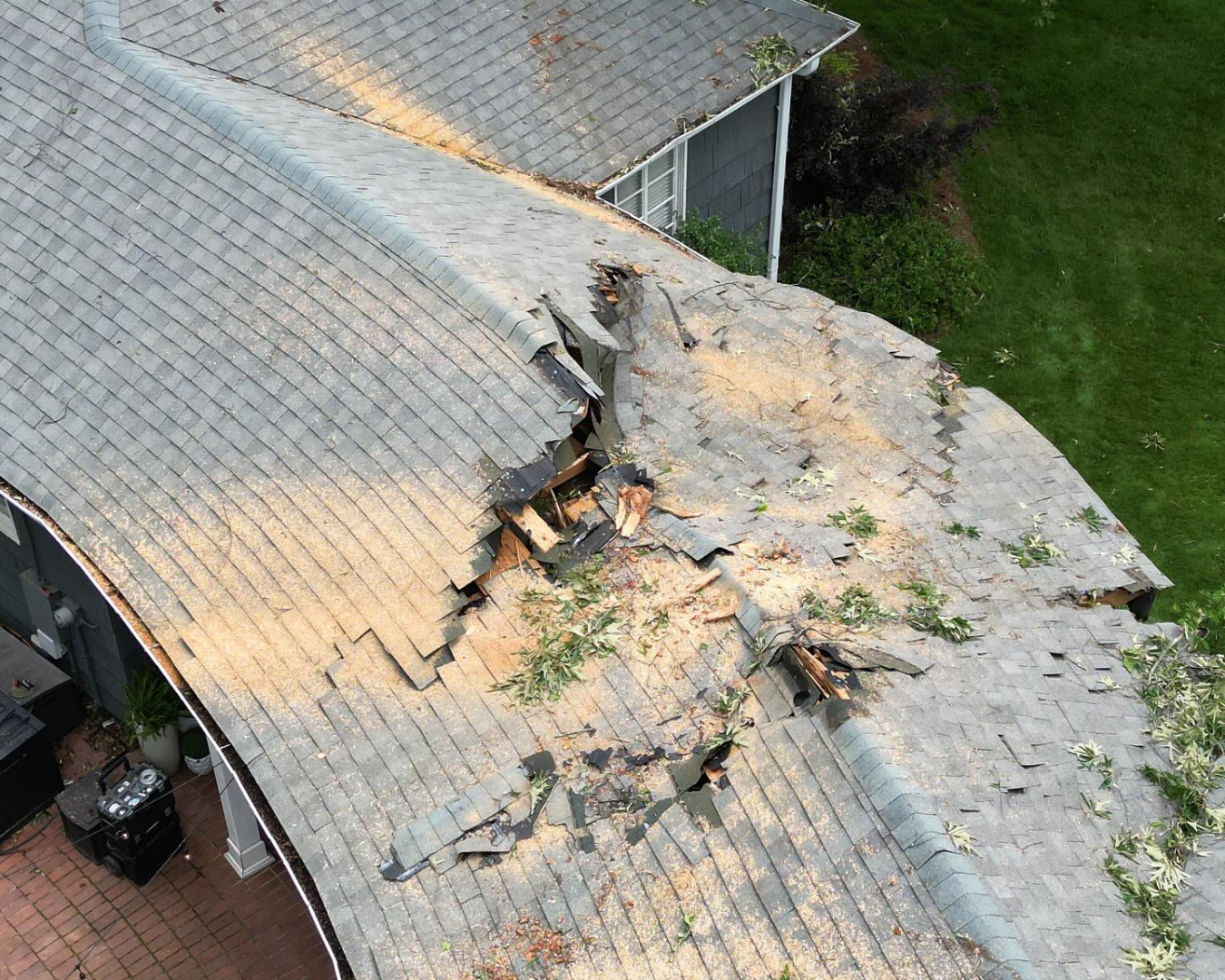
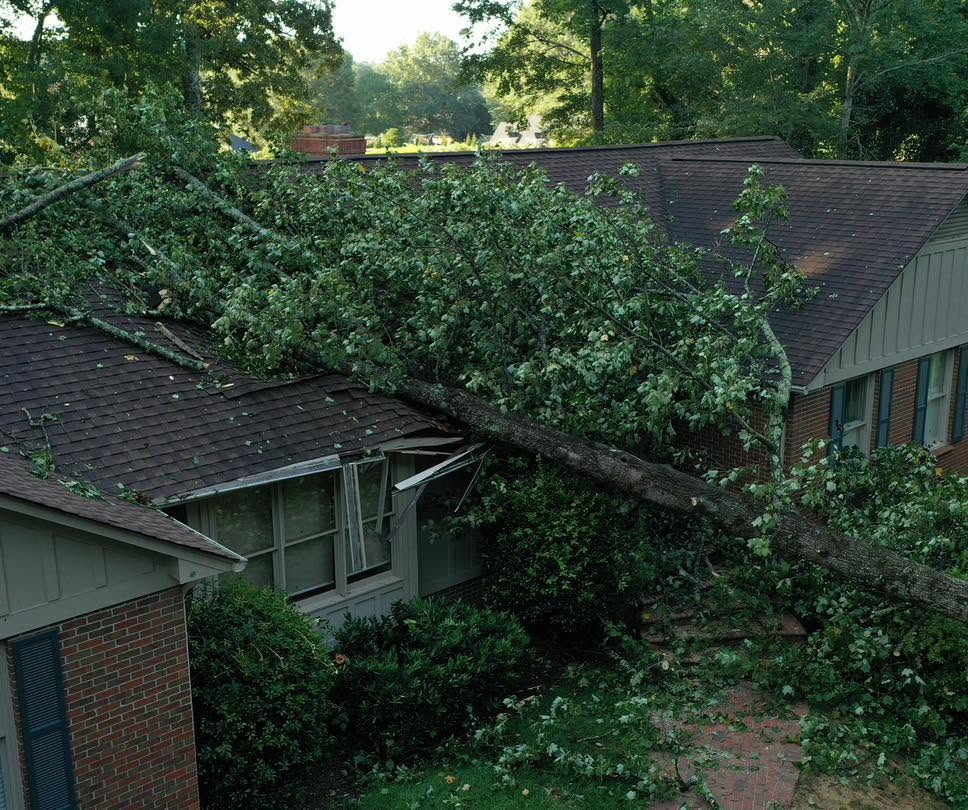
Sometimes, despite your best efforts, a tree or large branch still ends up on your roof.
If that happens, don’t climb onto the roof or try to remove the tree yourself. Downed trees and broken limbs can create unstable conditions, and power lines may also be involved. Safety should come first.
Once it’s safe, contact a qualified roofing professional to assess the damage. Depending on the situation, you may need emergency mitigation to protect your home from additional water damage while permanent repairs are arranged.
It’s also a good idea to document the damage with photos from a safe location and contact your insurance company if appropriate.
Don’t Wait for the Tree to Fall
You don’t have to be an arborist to spot some of the warning signs that a tree may pose a risk to your home. Overhanging branches, leaning trees, cracks, dead limbs, and visible decay are all reasons to take a closer look.
And in Upstate South Carolina, where strong winds and severe storms can affect communities well inland, preparing your property before the next storm can make a real difference. SCEMD recommends inspecting your roof, cleaning your gutters, and evaluating trees around your home as part of hurricane preparedness.
At Southern Shingles Roofing, we help homeowners throughout Anderson, Greenville, Clemson, Easley, Seneca, and surrounding Upstate communities with roof inspections, repairs, storm damage restoration, and emergency mitigation.
Worried a tree may be putting your roof at risk? Contact Southern Shingles Roofing for a professional roof inspection and free estimate. If a storm has already caused damage, we’ll help you determine what needs to happen next.