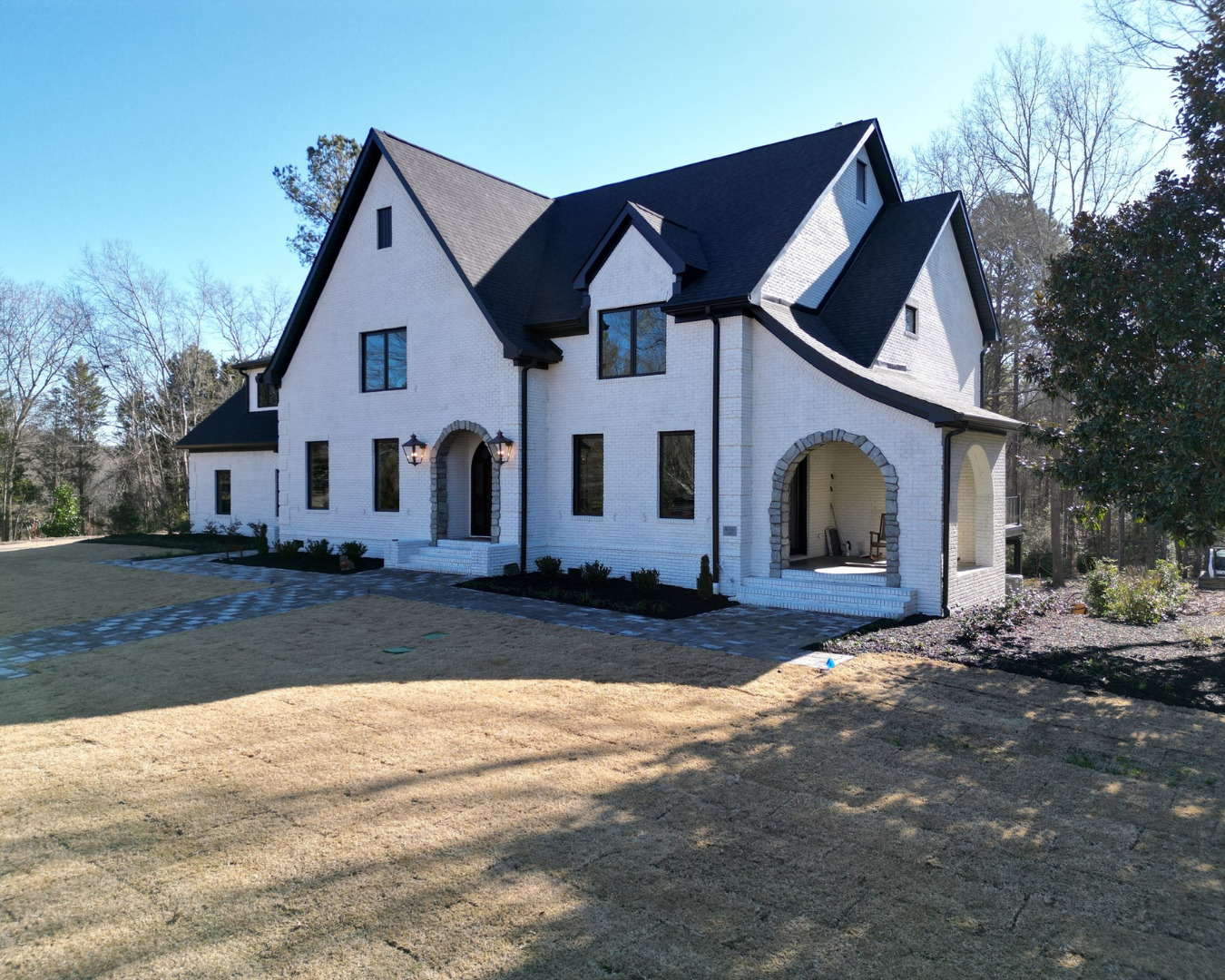
When homeowners think about roofing, materials usually come first. But in South Carolina’s hot, humid, and storm-prone climate, roof slope plays an equally important role in how well your roof performs.
Roof slope affects drainage, ventilation, material options, and long-term durability. At Southern Shingles Roofing, we help homeowners across Anderson, Greenville, Clemson, Easley, Seneca, and surrounding areas choose roof systems built for South Carolina weather.
Here’s what to know when choosing the right roof slope for your home.
What Roof Slope Is and Why It Matters
Roof slope describes how steep your roof is, typically shown as a ratio like 4:12 or 8:12. That measurement impacts how water drains, how heat escapes, and how well your roof stands up to heavy rain and wind.
In South Carolina, the wrong slope can lead to standing water, leaks, mold growth, higher energy bills, and a shorter roof lifespan.
Low-Slope Roofs in South Carolina
Low-slope roofs are common on modern homes, additions, and commercial buildings. While they can work well, they require the right materials and installation.
Because water drains more slowly, low-slope roofs are more vulnerable during heavy rain if drainage or sealing is inadequate. That is why traditional shingles are not recommended for low slopes.
Best options include:
- TPO roofing
- Modified bitumen
- Silicone roof systems
These materials provide better waterproofing and reflect heat, which helps with energy efficiency in South Carolina’s climate.
Moderate-Slope Roofs: The Most Popular Choice
Moderate-slope roofs are the most common residential roof type in South Carolina. They shed water efficiently while allowing for good attic ventilation.
These slopes support a wide range of materials, including architectural shingles, metal roofing, synthetic cedar shake, and slate-style options. They also offer a strong balance of performance, appearance, and maintenance.
Steep-Slope Roofs and Storm Performance
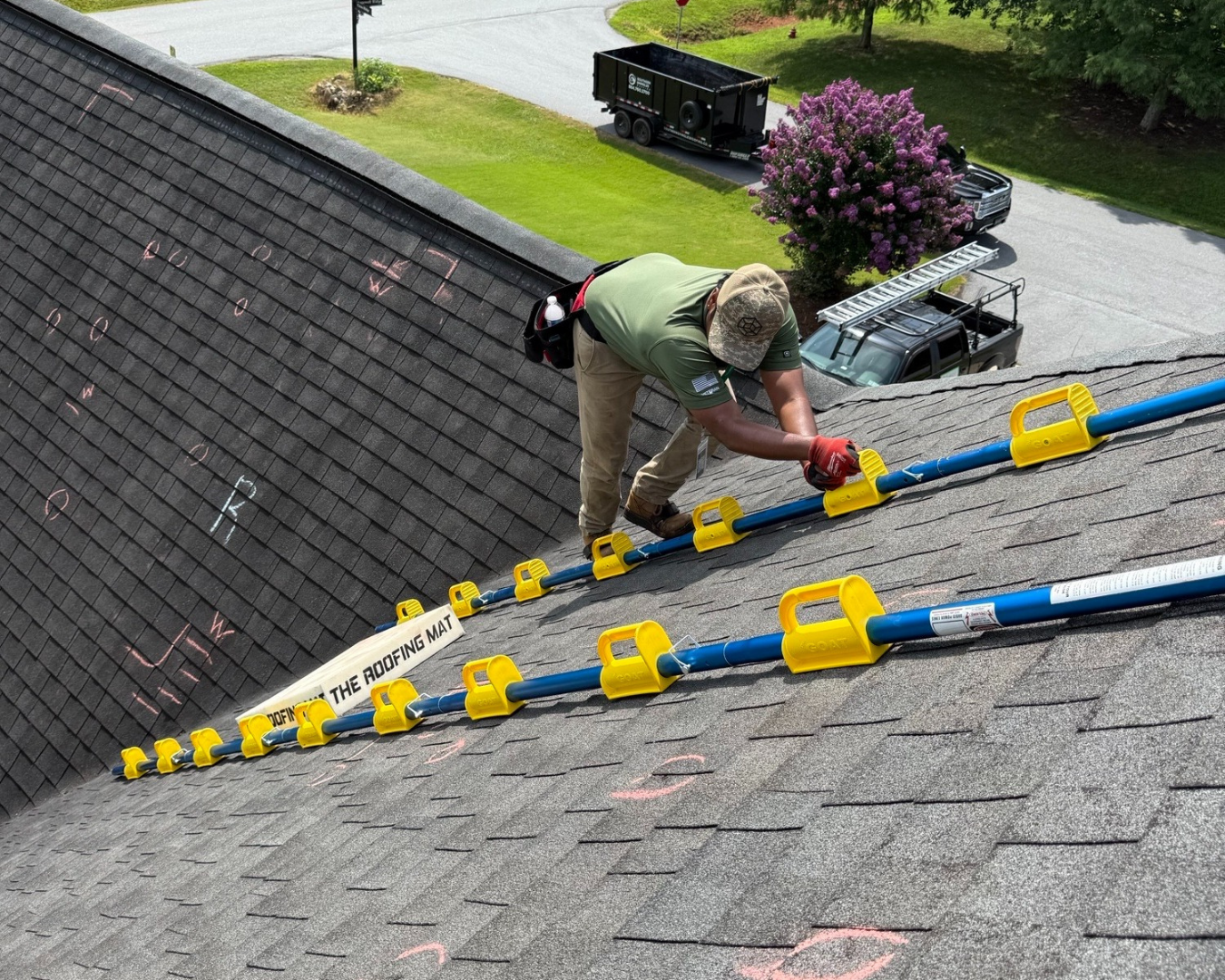
Steep-slope roofs shed rain quickly and reduce debris buildup, making them effective during heavy storms. They are often found on historic or high-end homes.
While they perform well, steep roofs can cost more to install and maintain due to safety requirements and labor.
Roof Slope and Storm Resistance
Roof slope affects how wind interacts with your roof during storms. Proper installation, fastening, and underlayment matter just as much as slope itself. A well-installed roof will always outperform a poorly installed one, regardless of pitch.
Ventilation, Heat, and Energy Efficiency
Roof slope influences attic ventilation, which is critical in South Carolina’s heat and humidity. Poor ventilation can trap moisture and heat, leading to higher energy bills, mold issues, and premature roof wear.
The right slope combined with proper vent placement helps your roof and HVAC system work more efficiently year-round.
Choosing the Right Roof Slope for Your Home
If you are building or planning a major renovation, roof slope should be part of the conversation. The right choice depends on your home’s design, local codes, storm exposure, and desired roofing materials. At Southern Shingles Roofing, we evaluate every factor before making a recommendation.
Our roof replacements are backed by an 8-year workmanship warranty and a 50-year materials warranty on installed products. We also offer extended warranties for added peace of mind. If you need help choosing the right roof system in Anderson, Greenville, Clemson, Easley, Seneca, or surrounding areas, contact Southern Shingles Roofing today for a free inspection or estimate.